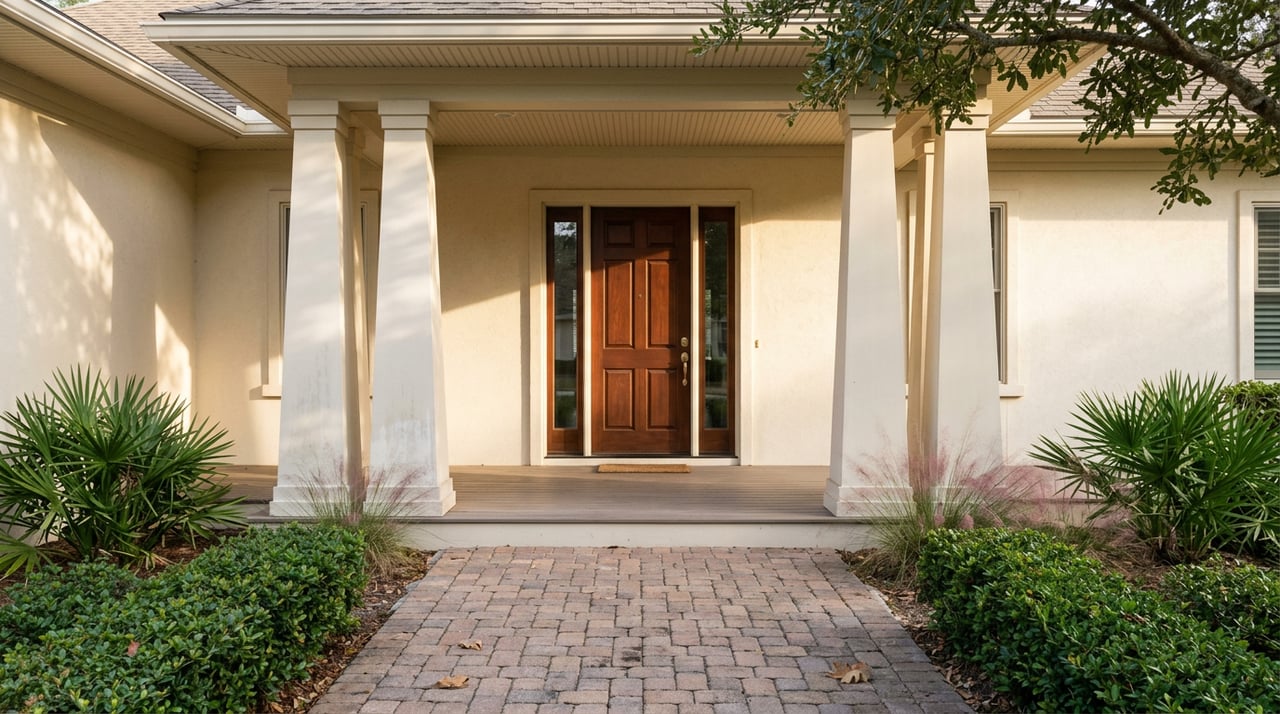
A buyer looking at a four-bedroom home in Sea Pines this fall sees one number under "HOA fee" on the listing sheet: roughly $2,065 a year. It reads like a complete answer. It covers gate security, road maintenance, common areas, the trolley system. If the plan is to live there full time and never rent it out, that number is close to the whole story.
If the plan includes renting the home even occasionally, that $2,065 is the first of at least three separate bills, and two of them either didn't exist or were priced differently three years ago.
One Line, Two Organizations
Part of the confusion starts before rental intent even enters the picture. Sea Pines has two organizations that use similar names. The Association of Sea Pines Plantation Property Owners is a volunteer advocacy group founded in 1973 at the request of Sea Pines developer Charles Fraser, and its membership runs about $50 a year. Almost nobody pays that one.
The mandatory fee, the one that actually funds security, gates, roads, and reserves, comes from a different entity entirely: Community Services Associates, Inc., known as the Sea Pines CSA. For 2026, the CSA's residential assessment is $2,065 for an improved lot and $1,233 for an unimproved one. When a listing sheet says "HOA fee," it is almost always quoting the CSA number, not the advocacy group's dues, but the two organizations share enough vocabulary that a buyer doing independent research can land on the wrong one without realizing it.
The Bills That Show Up Once You Decide to Rent
The CSA assessment covers ownership. It does not cover renting the property out, and that distinction has gotten more expensive to overlook.
In May 2022, the Sea Pines CSA board approved an Annual Rental Registration Program, effective January 1, 2023, for any residential property owner who rents at any time during the calendar year. The fee is tiered by advertised bedroom count and is separate from anything the Town collects: $300 for one to two bedrooms, $700 for three to four bedrooms, and $1,000 for five or more. It applies whether the home rents for one week a year or fifty, and it is non-transferable and non-refundable if ownership changes mid-year.
Then there's the Town of Hilton Head Island's own short-term rental permit, which is a separate government requirement layered on top of whatever the community charges. For a four-bedroom home planning to rent occasionally, the math for 2026 stacks like this:
| Fee | Amount |
|---|---|
| Sea Pines CSA annual assessment (improved lot) | $2,065 |
| Sea Pines CSA Rental Registration Fee (3-4 bedrooms) | $700 |
| Town of Hilton Head STR permit (4 bedrooms x $150) | $600 |
| Total before a single night of revenue | $3,365 |
That's a $3,365 annual floor on a property a listing sheet would likely describe with one line item near $2,065. It doesn't include property management, insurance, cleaning, or the accommodations tax collected on actual rental income.
The Bill That Changed This Year
The Town's permit fee is the newest piece of that stack, and it's worth understanding why it changed. For years, the Town charged a flat $250 per short-term rental property. Following updated STR regulations adopted in October 2025, the Town restructured that fee to $150 per bedroom, a shift it describes as moving the program to full cost recovery, meaning STR operations fund STR oversight rather than drawing on general Town revenue.
The fee change came with real staffing behind it. The Town's enhanced program added six full-time STR-dedicated positions, including a 24/7 dispatcher, two community code enforcement officers, and a dedicated STR property inspector, alongside converting two existing part-time roles to full-time. The permit payment portal for the current cycle opened April 6, 2026, with renewal aligned to the April 30 business license deadline. The stated goal, according to the Town's announcement, is moving from a complaint-based enforcement model to a performance-driven one, with faster response times and proactive inspections rather than waiting for a neighbor to call.
Put the two changes together and the picture is clear. A rental-intending buyer comparing this year's numbers to a five-year-old blog post isn't just looking at slightly stale figures. They're missing a fee category that didn't exist in 2022 and a permit structure that didn't exist before this spring.
Same Word, Different Number Elsewhere on the Island
The instinct to treat "HOA fee" as a single comparable line item breaks down again the moment you leave Sea Pines. A few examples show the range:
- Wexford charges a regular assessment of $22,004 annually, billed quarterly at $5,501, described as providing all-inclusive use of community amenities. That functions closer to a country club membership than a maintenance fee, and it typically comes with a one-time initiation fee and an annual food and beverage minimum on top.
- Palmetto Dunes posted a 2025 residential assessment of $1,900 a year, funding shared infrastructure like walkways, bike paths, and guard gates. Owners who rent register separately with the POA, and that registration carries no extra charge comparable to Sea Pines' tiered fee.
- Hilton Head Plantation lists improved-lot assessments at $1,355 a year and unimproved lots at $813, both figures from 2025. It also charges a one-time transfer fee at closing equal to a quarter of one percent of the sale price, capped at $10,921, which is a cost some buyers don't discover until settlement paperwork.
- Palmetto Hall separates its POA fee from club membership entirely, and club membership there is mandatory rather than optional, so the POA number alone understates what ownership actually costs.
None of these structures is better or worse than another. They're different financial products that happen to share a label on an MLS data sheet.
What This Means Before You Write the Offer
If a rental plan is part of the purchase, the "HOA fee" line stops being useful as a comparison point on its own. A few questions get you to the real number faster than portal research will:
- Is this fee mandatory, or is it a separate voluntary membership with a similar name?
- Does the community charge its own rental registration fee on top of the Town's STR permit, and is it tiered by bedroom count?
- Is club membership bundled into the assessment, or billed separately and required?
- Does the fee sheet reflect this year's schedule, or one that's a year or two old?
It's also worth folding South Carolina's property tax structure into the same conversation, since it interacts with rental intent the same way the fee stack does. Primary residences are taxed at 4% of assessed value, while non-owner-occupied property, which includes most rental-intended second homes, is taxed at 6%, before local millage is applied. That's not a Hilton Head-specific quirk, but it compounds the same lesson: the number that describes living in a home and the number that describes renting it out are rarely the same number, even when they share a line on the same sheet.
A Few Questions Worth Asking Before Closing
Does every Hilton Head community charge a rental registration fee like Sea Pines? No. The CSA program is specific to Sea Pines. Other communities set their own policies, so a buyer planning to rent should confirm the actual rule with that community's association rather than assuming Sea Pines' structure applies island-wide.
Is the Town's per-bedroom permit fee the only government-level cost on a rental? It's the permit fee specifically. Short-term rental operators also carry accommodations tax collection and remittance responsibilities and a Town business license, both of which are separate obligations from the permit itself.
Does Sea Pines charge a transfer fee at closing the way some other communities do? The Sea Pines CSA does not charge its own transfer fee payable at closing. A separate, island-wide fee applies to property sales regardless of community, so it's worth confirming which fee applies to a specific transaction and which entity collects it.
The number on a Hilton Head listing sheet is a starting point, not a total. For a buyer weighing whether a property pencils out as an occasional rental, the real total lives in three or four separate documents: the association's current assessment notice, its rental registration policy if one exists, and the Town's own permit and business license requirements for the year you're closing. Getting all of them in hand before an offer goes in is the difference between budgeting for a home and getting a bill you didn't expect in month two.
If you're comparing Hilton Head communities and want the full fee picture on a specific property before you write an offer, Kim McElman can walk through the current numbers with you. Let's Connect.